
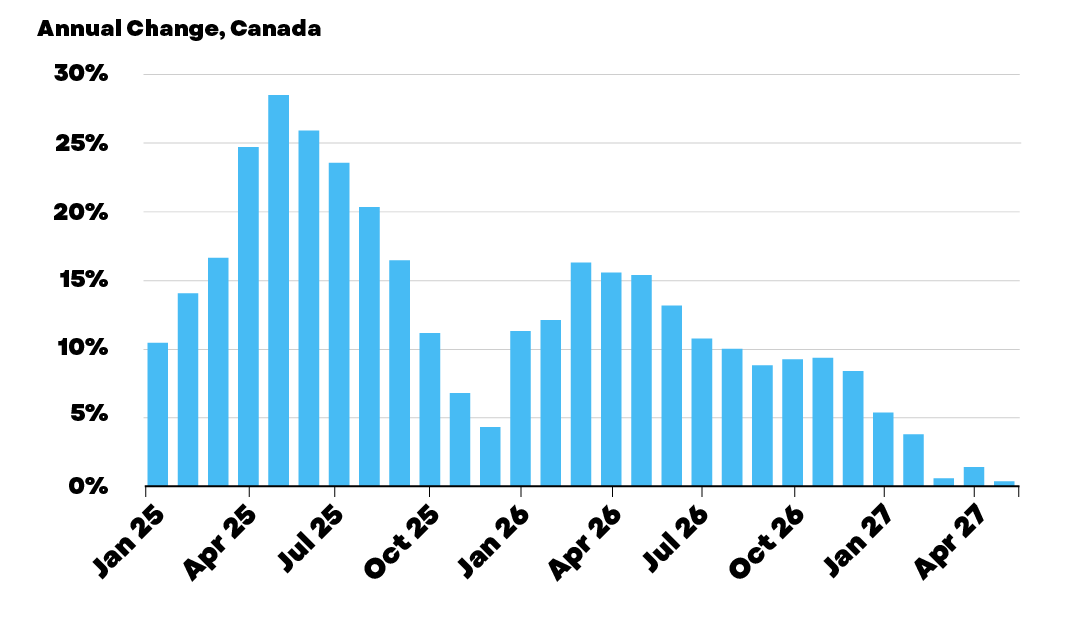
Is it still a buyer’s market in Canadian real estate? Not really. Not nationally, anyway. Months of inventory sat at 4.8 in May 2026, right in balanced territory and nowhere near the 6.4 months that signals a genuine buyer's market. Here's what's actually going on underneath that number.
The National Data Doesn't Tell You Much
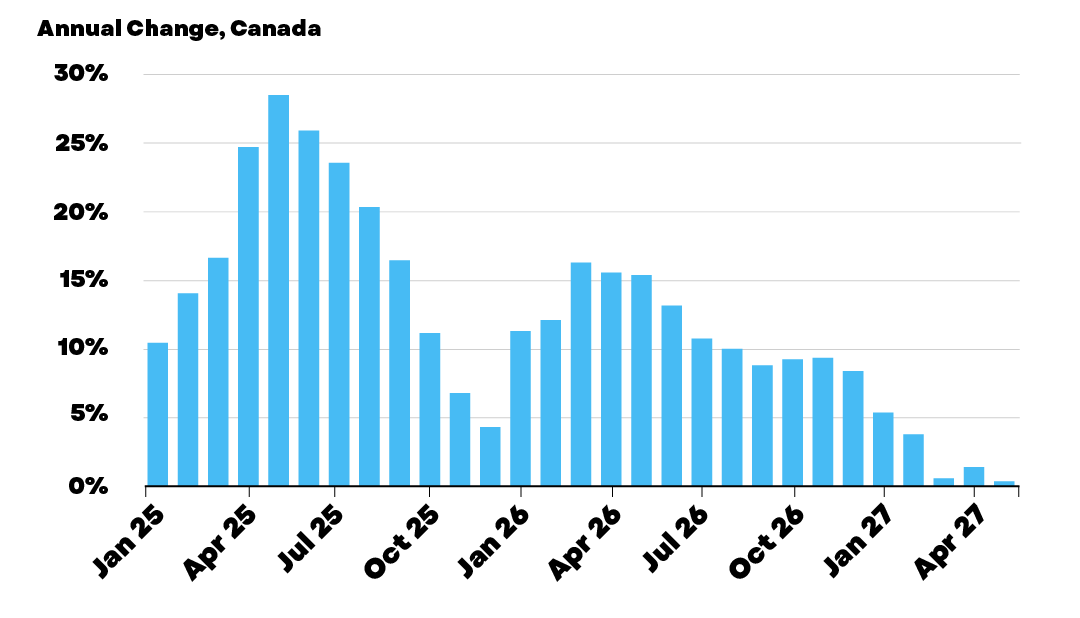
About 200,000 homes were listed for sale across Canada at the end of May 2026, unchanged from a year earlier (CREA). Sounds like nothing changed. Its actually a fairly significant shift. Back in November 2025, active listings were still climbing 8.5% year-over-year, the kind of inventory growth that gave buyers real negotiating leverage.
That growth has essentially stopped. The Canadian housing inventory expansion that defined 2025 isn't building anymore, and depending on where you live, that changes the buyer's market question quite a bit.
Alberta and Saskatchewan: Clearly Not Buyer’s Markets
Alberta and Saskatchewan are sitting at just 2.9 and 2.8 months of supply as of May 2026 (CREA), both well below the 3.6-month threshold where seller's market conditions begin. So if you're wondering whether its harder to find a home in these provinces now compared to last year, the answer is yes. Noticeably harder.
Tight inventory at these levels typically translates to faster accepted offers, firmer benchmark pricing, and very little room to negotiate on list price or conditions. If you're house hunting in Alberta or Saskatchewan right now, the buyer's market you may have heard about isn't what you're going to walk into.
BC: Buyers Still Have the Advantage
BC remains the exception at 6.7 months of supply in May 2026, enough to lean into genuine buyer's market conditions with real negotiating room on active listings (CREA). Ontario sits in between at 4.2 months, down from 4.4 a year ago. Even the more balanced provinces are drifting away from buyer-friendly territory. Is the buyer's market ending in Canada nationally? Mostly, yes. BC is just holding out a little longer than everywhere else.
The sales-to-new-listings ratio backs this up. It rose to 49.2% in May 2026, up from 46.2% in April, alongside months of inventory falling from 5.1 to 4.8. Both indicators moving in the same direction at once is the early signal of a market tilting toward sellers across most of the country.
Frequently Asked Questions
How many homes are currently for sale in Canada?
Roughly 200,000 properties were listed on Canadian MLS listings at the end of May 2026, unchanged from a year earlier and approximately 2.8% below the long-term seasonal average for that time of year (CREA). The number itself hasn't changed dramatically. What's changed is that it's no longer growing.
What does months of inventory mean in real estate?
It measures how long it would take to sell all current active listings at the existing pace of sales. CREA's national long-term average sits around five months. Below 3.6 months signals seller's market conditions. Above 6.4 signals buyer's market conditions. Canada's national figure sat at 4.8 months in May 2026, down from 5.1 in April, within the balanced range but moving toward sellers.
Is Canada still a buyer's market in 2026?
Nationally, no. Months of inventory stood at 4.8 in May 2026, within CREA's balanced range of 3.6 to 6.4, a real shift from late 2025 when elevated active listings still gave buyers more leverage. BC at 6.7 months remains in buyer's market territory. Alberta and Saskatchewan at 2.9 and 2.8 months are firmly in seller's market conditions.
Why are there fewer homes for sale than expected?
New listings have been declining month-over-month, limiting inventory growth even as buyer demand hasn't fully returned. CREA reported new listings fell 1% month-over-month in May 2026, following a 2% monthly decline in December 2025. Fewer new listings entering the market means the supply pipeline is contracting even before the active listing totals fully reflect it.
Will home prices rise if housing inventory keeps shrinking?
Tighter inventory historically supports firmer benchmark pricing. The national sales-to-new-listings ratio rose to 49.2% in May 2026, up from 46.2% in April, alongside months of inventory falling from 5.1 to 4.8. Those two indicators moving together are the early signals of a market shifting toward sellers nationally.
How do I get a mortgage pre-approval before inventory tightens?
Provide a lender with proof of income, employment history, existing debts, and down payment funds. They'll estimate your borrowing capacity and hold a rate for 90 to 120 days. With CREA reporting May 2026 sales already up 5.5% month-over-month, getting pre-approved before you start touring active listings is the right sequence in this market.
Data sources: CREA (National Statistics, May 2026; Provincial Board Statistics, May 2026)
Posted by Christopher Audette on
Leave A Comment