That's not a bait to get you to click, it’s just not an intentional lie. The problem is the headlines are answering the question. According to CREA's 3-month seasonally adjusted price data from January to April 2026, Vancouver has shed approximately 3.0% in home value while Halifax has gained 1.3%. Both are happening right now, in the same country, under the same interest rate environment. If you're making a real estate decision based on what "the Canadian market" is doing, you're asking the wrong question. The right question is: what is your city doing?
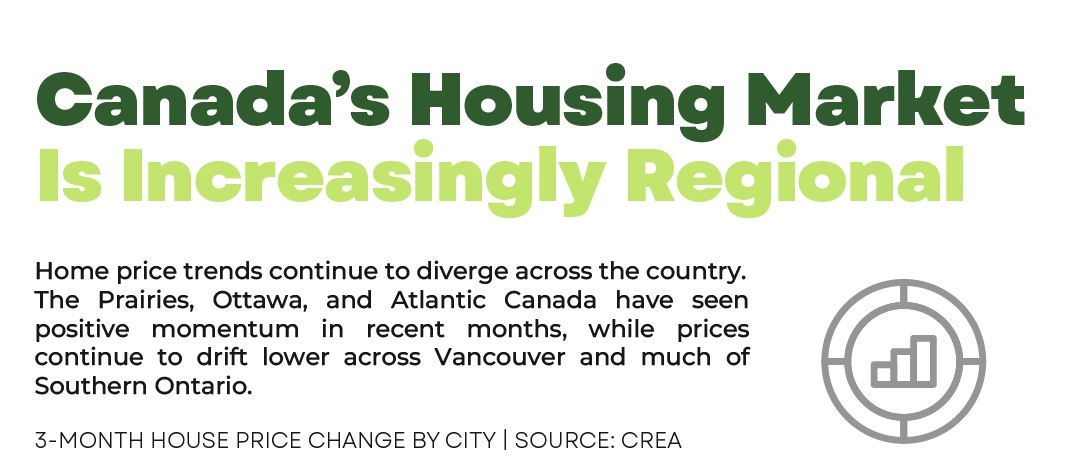
The National Average Is Lying to You

Canada's national 3-month price change sits at approximately -1.0% as of April 2026. That number is technically accurate and almost completely useless for…

86 Views, 0 Comments

If you want to understand where Canadian real estate is headed, the best place to start is where it's been. Forty-seven years of annual price data from the CREA MLS dataset, covering 1980 all the way through 2026, tells a story that's more reassuring, more nuanced, and more useful than anything you'll read in today's headlines. And once you see the full picture, the current soft correction looks a lot less alarming.

The Opening Chapter: 1980 to 1995

The story starts with a bang. Canadian home prices jumped +18.9% in 1981, one of the strongest single-year gains in the entire dataset. But what goes up in an overheated market often pulls back, and 1982 brought a -2.7% correction as interest rates spiked dramatically. Sound familiar?

What's…

1179 Views, 0 Comments

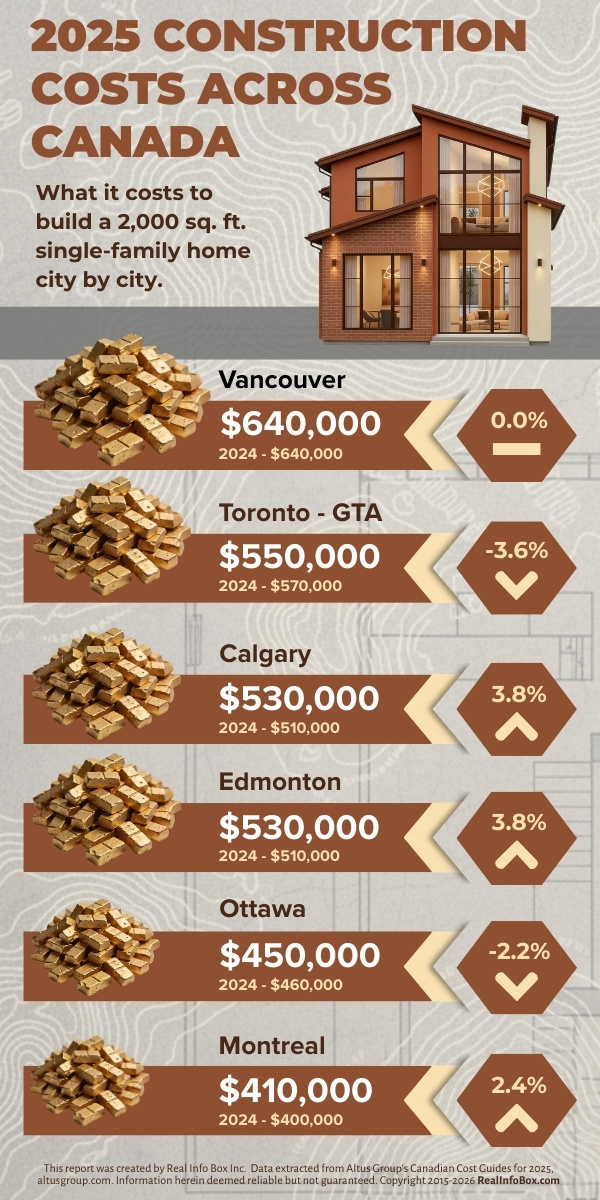
Here's a number that'll stop you mid-scroll: building the exact same 2,000 sq. ft. home costs $230,000 more in Vancouver than it does in Montreal. Same size. Same building type. Completely different price tag.

That gap tells you more about how Canadian construction pricing actually works than any national average ever could.

All figures below come straight from Altus Group's Canadian Cost Guide for 2025. Here's what's changed, and what hasn't.

The 2025 New Home Construction Costs, City by City

The benchmark: a 2,000 sq. ft. wood-framed single-family home with an unfinished basement, using the upper-end estimate per city.

What's Actually Driving Costs in Each City

Vancouver: Still the Most Expensive, But Finally Flat

At $640,000,…

1281 Views, 0 Comments

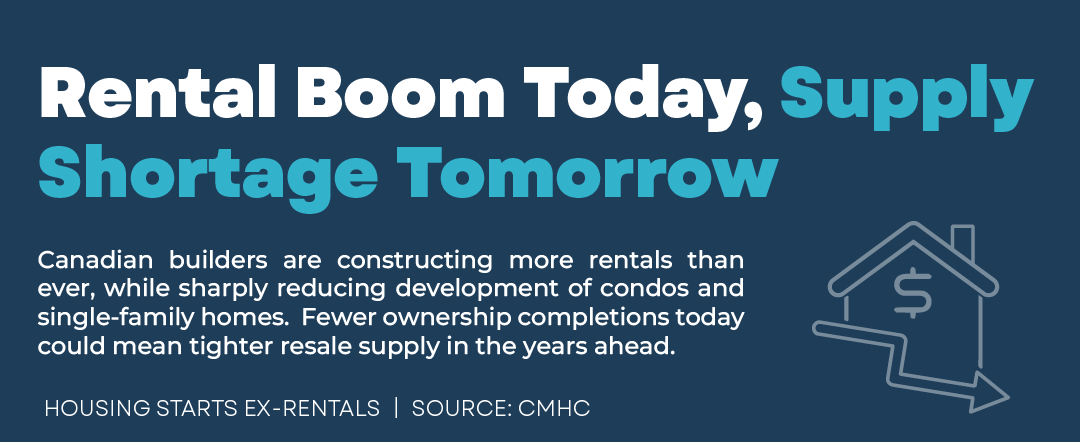
That headline isn't an exaggeration. It's data straight from CMHC. Canadian ownership housing starts have fallen to approximately 100,000 units on a 12-month rolling basis in 2026, matching the lowest level ever recorded in the dataset. The last time the Canadian residential construction sector was here was 2010, right after the global financial crisis. And what happened in the years that followed should be on every buyer's and seller's radar right now.

What "Housing Starts" Actually Means, And Why It Matters

A housing start is counted when construction begins on a new residential unit. The figure CMHC tracks as "ex-rentals" measures specifically the condos and single-family homes that will eventually be available for Canadians to buy, not…

889 Views, 0 Comments

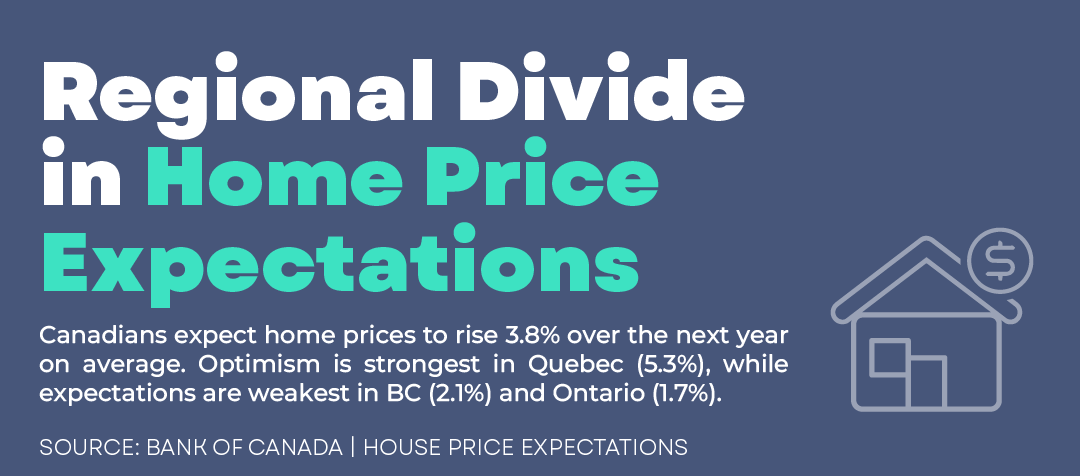
The Bank of Canada's Q1 2026 house price expectations survey answers this question with more clarity than you usually get from national housing data. Quebec at 5.3%. Atlantic Canada near 5%. Manitoba and Saskatchewan close behind. Alberta at 4.1%. All of them running above the national average of 3.8%.

Then there's the other end of the table. Ontario at 1.7%. BC at 2.1%. The two weakest provincial markets in the country, sitting 3.6 percentage points below Quebec's expectation. That's not noise in the data. That's a structural divide, and it creates entirely different strategic realities for buyers and sellers depending on which side of it they're on.

Why Are Ontario and BC Home Prices So Weak in 2026?

If you've looked at the housing market…

1009 Views, 0 Comments