
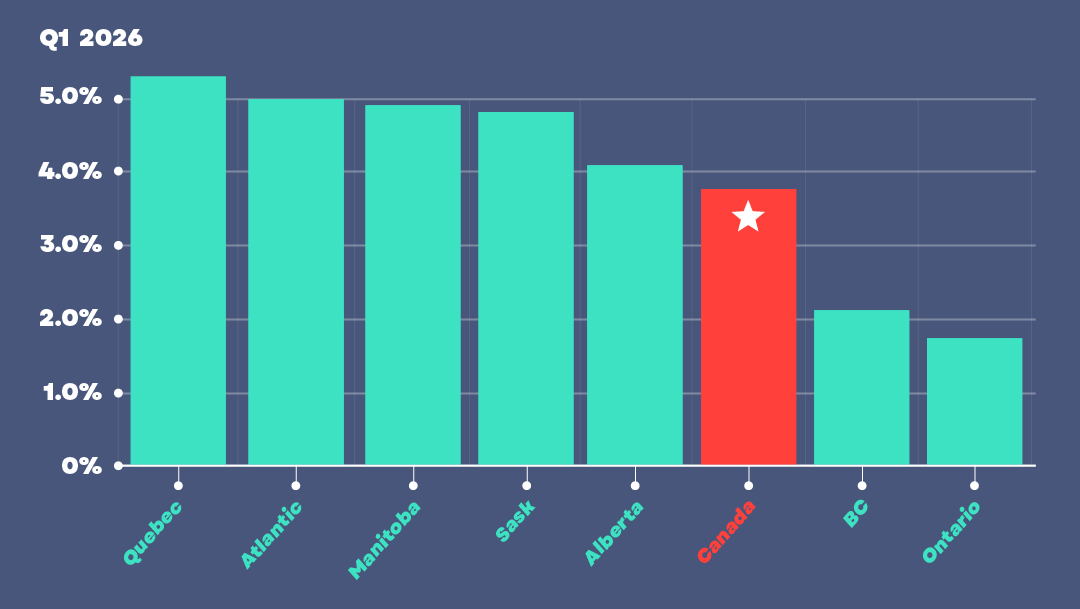
The Bank of Canada's Q1 2026 house price expectations survey answers this question with more clarity than you usually get from national housing data. Quebec at 5.3%. Atlantic Canada near 5%. Manitoba and Saskatchewan close behind. Alberta at 4.1%. All of them running above the national average of 3.8%.
Then there's the other end of the table. Ontario at 1.7%. BC at 2.1%. The two weakest provincial markets in the country, sitting 3.6 percentage points below Quebec's expectation. That's not noise in the data. That's a structural divide, and it creates entirely different strategic realities for buyers and sellers depending on which side of it they're on.
Why Are Ontario and BC Home Prices So Weak in 2026?
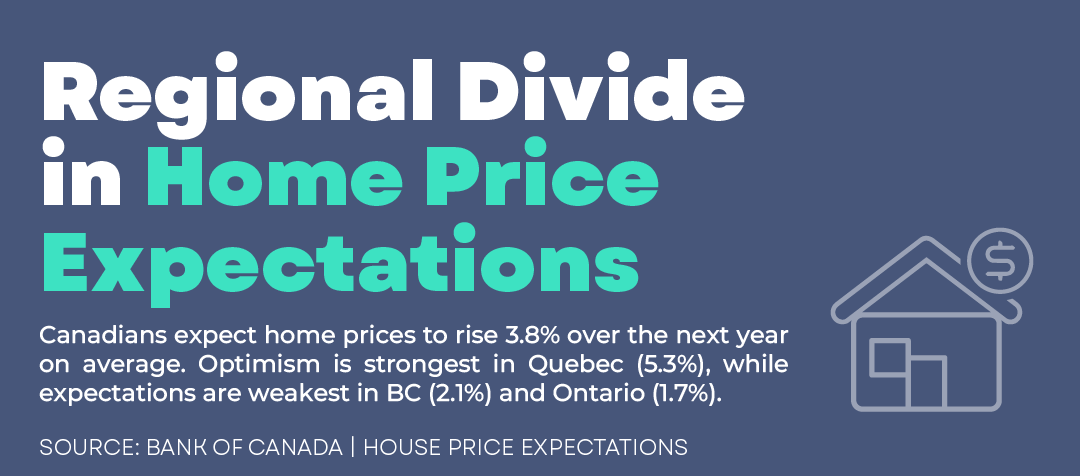
If you've looked at the housing market lately, you've probably noticed something strange: Ontario home prices have dropped 6.5% compared to last year, and BC isn't far behind, down 5.8%. Right now, both provinces are sitting right at the bottom of Canada's real estate growth charts. We're looking at a tiny 1.7% expected growth for Ontario and just 2.1% for BC. Honestly, they’re the weakest numbers in the country.
This isn't just a random fluke; it's a real trend. What makes it even wilder is that Canada's national average home price forecast for 2026 is actually a decent 3.8%. But that number is being propped up by Quebec (shining at 5.3%), Atlantic Canada (sitting near 5%), and the Prairies. Ontario and BC are definitely not the ones doing the heavy lifting here.
So, what’s really going on under the hood? And more importantly, what does this mean for you if you're trying to buy or sell a home in these areas right now?
The Data Behind the Weakness
Let's be real: Ontario's price drop in 2026 shouldn't surprise anyone who’s been watching the cracks form since 2023. The numbers we're seeing are just the tip of the iceberg.
Active real estate listings in BC are hitting heights we haven't seen since 2015. Over in the GTA, the condo market is practically drowning in supply with no quick fix in sight. On top of that, average rents across Canada just hit a 35-month low in March 2026. Why? Well, fewer people moving in means less rental demand, which completely spoils the vibe for real estate investors. Naturally, buyer activity in both markets has taken a big hit.
Then there's the headcount. Ontario’s population shrank by about 0.7% year-over-year at the end of 2025, and BC dropped by 0.75%. This is mostly because about 461,000 temporary residents packed up and left after the federal government changed its immigration policies back in 2024. Fewer people means fewer households needing a roof. And less demand leads exactly to what we're seeing: benchmark prices are sliding, homes are sitting on the market longer, and buyers suddenly have the kind of leverage they haven’t seen in years.
To put it plainly, that's why BC and Ontario have the weakest outlooks right now—no fancy jargon needed. It's just a bunch of major structural shifts crashing into each other at the exact same time. But hey, if you're a buyer in these markets, that messy combo is actually a massive opportunity.
Where Prices Are Expected to Rise
While Ontario and BC are stuck at the bottom, five other provinces are absolutely crushing the national average. The housing divide in Canada right now is about as clear as day.
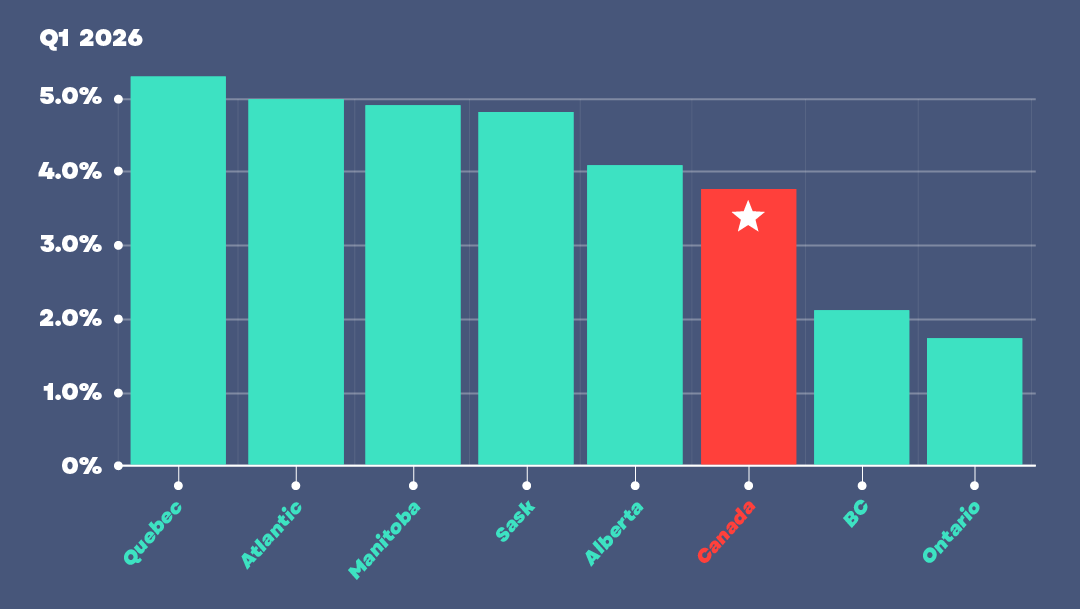
Quebec is leading the pack at 5.3% growth, thanks to three straight months of record-breaking prices. In fact, the provincial benchmark hit $549,400 in March 2026. This isn't just wishful thinking or blind optimism; it's backed by hard data and a massive shortage of houses for eager buyers. Atlantic Canada and Manitoba are right behind them around 5%, with Saskatchewan near 4.8% and Alberta at 4.1%.
The story in Atlantic Canada, Manitoba, and Saskatchewan is pretty much the same: super tight inventory, plenty of active buyers, and population numbers moving in the right direction. Just look at Newfoundland—their prices jumped a whopping 9.3% year-over-year in March 2026. Saskatchewan also saw a solid 6.5% bump.
These markets are living a completely different reality than Ontario and BC. And that gap isn't closing anytime soon; it's getting wider. If you're wondering where Canadian home prices are going to climb the most this year, the numbers have already spelled it out.
Why Is the Quebec Housing Market So Strong?
It’s a totally fair question, especially if you’re a buyer in Ontario watching Quebec’s red-hot numbers from across the border.
Quebec’s 5.3% growth expectation didn't just appear out of nowhere. We're talking three consecutive record-breaking months, housing supply at multi-year lows in several major cities, and buyer demand that hasn't flinched—even with all the economic uncertainty that shook up Ontario and BC. Plus, their population dynamics are incredibly stable. While it might not have the massive rush of people moving to Alberta, it's holding up way better than the West Coast or Ontario.
Why are people so confident prices will keep rising in Quebec and the Prairies while the rest of the country cools down? It’s pretty simple: supply is genuinely tight, local buyers haven't walked away, and the folks who were waiting on the sidelines are slowly jumping back in. The basic market fundamentals are doing exactly what they're supposed to do—holding strong.
Ontario vs Quebec in 2026.
Ontario right now is a buyer's paradise in a way we haven't seen since before the pandemic boom. There are way more listings, homes are sitting on the market longer, and sellers are actually accepting conditional offers again. You have real room to haggle on the price and closing costs. If you’ve got your finances sorted out, don't mind a bit of short-term price dipping, and are looking at a 5-to-10-year horizon, this is probably the best entry point you'll get for a while. Just make sure you find an Ontario realtor who actually gets today's lower benchmark prices, rather than someone still living in 2023—that's the key to making this leverage work for you.
Quebec, on the other hand, is a completely different ballgame. Buying a home there in 2026 means stepping into a market where being ultra-prepared is your only real edge. Supply is incredibly tight, and any property priced right is going to spark a bidding war. Getting pre-approved for a mortgage isn't just a polite suggestion here; it's a must. The silver lining? You’re buying an asset that has some serious upward momentum behind it.
Is BC Real Estate Still a Good Investment in 2026?
The short answer? It all comes down to your timeline.
With BC sitting on the second-weakest outlook in Canada (a meager 2.1% expected growth), prices down 5.8% year-over-year, and listings at their highest since 2015, the short-term case looks pretty shaky. Investors are stepping back because the rental market has lost its spark. That's just the reality on the ground.
However, CMHC predicts things will start to bounce back nicely by 2027 as pent-up demand returns and affordability gets a bit better. The long-term fundamentals for BC—like geographic limits on building new homes, steady long-term population growth, and economic power—haven't changed. So, if you're wondering if BC real estate is still a smart play, the honest truth is: you've got a better entry price than you’ve seen in years, but you need to be realistic about the near term.
Is Alberta Real Estate Overpriced in 2026?
Not necessarily, but it’s worth looking at the details.
Alberta is looking at a solid 4.1% expected growth compared to Quebec’s 5.3%. Alberta’s numbers are propped up by a massive influx of people moving from other provinces to Calgary and Edmonton and a healthy boost from the energy sector. Meanwhile, Quebec is thriving on tight housing supply, record-breaking benchmark prices, and incredibly stubborn buyer demand. Both markets are healthy, but if you're purely chasing price growth right now, Quebec’s fundamentals look a bit sharper.
What This Means for Buyers
- Ontario and BC: Think of this current slump as your golden window—so use it! With plenty of listings, homes taking longer to sell, conditional offers back on the table, and genuine room to negotiate on the final price and closing costs, you hold the cards right now. Get your mortgage pre-approved, partner up with an agent who actually knows today's realistic benchmark prices, and make your move before the inevitable recovery shrinks your advantage. Oh, and definitely get a detailed market analysis of your target neighborhood before tossing out offers.
- Quebec, Atlantic Canada, and the Prairies: Supply is low and the competition is fierce. You need to show up ready to roll: financing locked down, a clear checklist of what you want, and a local agent in your corner before you start touring homes. It's a great idea to scroll through active MLS listings early just to calibrate your expectations before your dream home pops up. And if you're thinking of selling here, listing while things are this hot puts you in a massive position of strength.
What This Means for Sellers
- Ontario and BC: Pricing discipline is absolutely everything right now. Buyers are incredibly smart, they're looking at multiple options, and they're in no rush. If you want to sell your home in Ontario or BC right now, you have to start with a realistic home valuation based on current benchmark data—not what your neighbor got back in 2024. Good old-fashioned curb appeal and staging matter a ton in a buyer's market, too. Overpriced homes are just collecting dust, while properly priced ones are moving. There's no way around it.
- Quebec, Atlantic Canada, and the Prairies: Buyers are out in droves, inventory is scarce, and price expectations are the highest in the country. If you're going to list your home for sale in Quebec or Atlantic Canada, do it now while you hold all the leverage, before more sellers jump into the market and start competing for the same buyers. Just remember that a solid market analysis based on fresh benchmark data—not last year's outdated sales—is still your best tool to get the price right.
Frequently Asked Questions
What province has the highest home price growth expectations in Canada in 2026?
Quebec is leading the country at 5.3%, driven by three straight months of record-breaking benchmark prices and a serious lack of inventory. Atlantic Canada and Manitoba are right behind at around 5%, with Saskatchewan sitting at 4.8%. These hot spots all have the same winning combo: low supply, high demand, and steady population growth that keeps buyer confidence high. Take a look at current MLS listings in these provinces to see just how tight inventory really is compared to elsewhere.
Why are home price expectations so low in Ontario and BC?
Both provinces are dealing with a perfect storm: year-over-year benchmark price drops (around 6.5% in Ontario and 5.8% in BC), a mountain of newly completed condos hitting the market, slower rental demand, and people leaving the provinces due to the 2024 temporary resident immigration changes. It’s not just one single issue—it’s a bunch of big structural pressures piling up since 2023 that are finally hitting the data. The upside? If you're a buyer, this exact pile-up is what's giving you great negotiating power on price and conditions right now.
Is now a good time to buy a house in Canada in 2026?
It completely depends on where you live. In Ontario and BC, buyers have the kind of leverage they haven’t seen since before the pandemic—think tons of choices, slower sales cycles, and conditional offers. In Quebec, Atlantic Canada, and the Prairies, inventory is super tight and competition is brutal, so being fully prepared is your only real edge. No matter where you are, getting your mortgage pre-approved before you start hunting is the absolute best first step you can take.
Is BC real estate still a good investment in 2026?
It carries a bit more short-term risk than usual, but the long-term play is still very solid. Yes, the expected 2.1% price growth is the second lowest in the country, benchmark prices are down 5.8% year-over-year, and listings are at their highest since 2015. That sounds rough, but CMHC expects a steady recovery to kick in by 2027 as buyers return. If you're playing the long game, you're getting a much better entry point right now than you've had in years.
What is the best province to buy real estate in Canada in 2026?
If you're chasing pure price growth, Quebec and Atlantic Canada are your best bets. If you want maximum buyer leverage and room to negotiate a discount on the price or closing costs, Ontario and BC are offering incredible deals with benchmark prices down 5–7% from 2025 levels. If you want a nice mix of affordability, booming populations, and tight housing supply, Saskatchewan and Alberta offer a fantastic middle ground that often flies under the radar. The "best" province just depends on whether you want a discount or immediate growth. A local real estate agent who knows their specific market is always your best guide to figuring that out.
Data sourced from Edge Analytics, the Bank of Canada House Price Expectations Survey Q1 2026, CREA MLS HPI March 2026, CMHC Housing Market Outlook 2026, and TD Economics Provincial Housing Outlook March 2026.
Posted by Christopher Audette on
Leave A Comment