
Canada just did something it's never done before: its population shrank. Buried inside that headline is a bigger story. One province is booming while the two largest are losing residents fast. Here's what that means for housing, market by market.
The National Number Doesn't Tell You Much
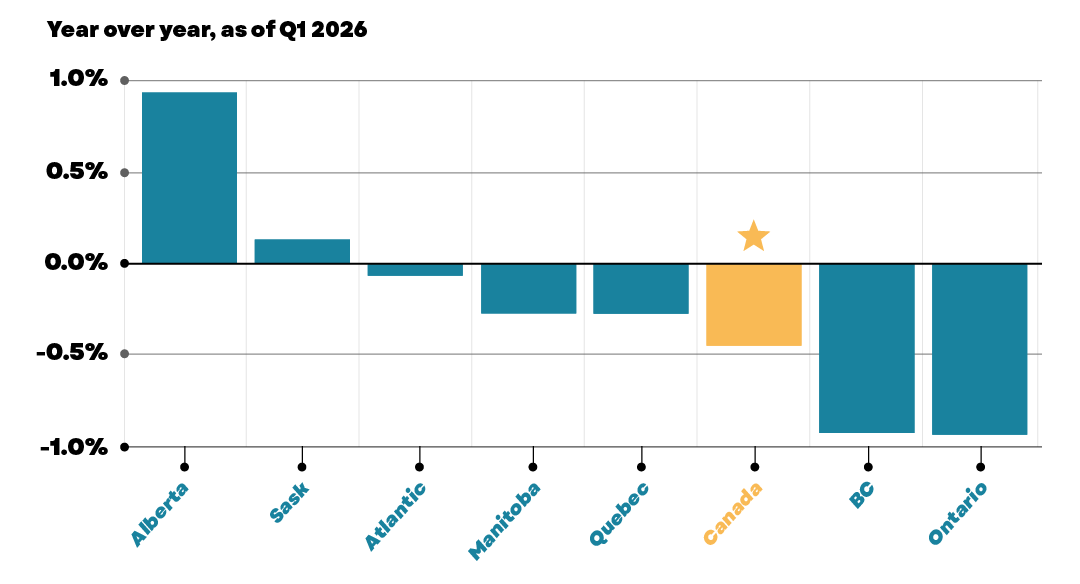
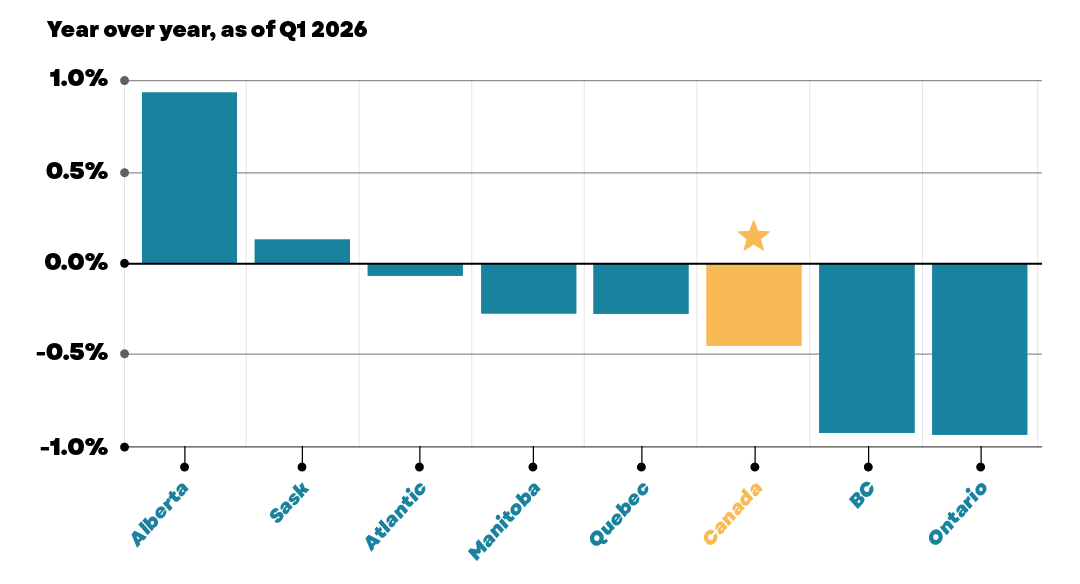
Canada's population fell 0.25% in Q1 2026, that's 103,500 people, following the country's first-ever annual decline in 2025 (Statistics Canada). Easy to read that as "the whole country is slowing down." Not quite right, though. That national figure is an average of some very different local realities, and it's the local realities that actually move housing markets, benchmark prices, active listing counts, and days on market. This is the first post in a series digging into what these shifts mean, city by city.
The Province Bucking the Trend: Alberta
Alberta grew 0.14%, adding 7,300 people, in Q1 2026, the only province to post population growth at all, and has led the country in interprovincial migration for 14 consecutive quarters (Statistics Canada). Lower housing costs relative to Ontario and BC, no provincial sales tax, and a steady job market are pulling residents in from across the country.
You can see the effect directly in the Alberta housing market data. Supply sat at just 2.9 months in May 2026, one of the tightest seller's markets in Canada, with sold benchmark prices at record highs (CREA). Active listings move fast in Calgary and Edmonton. Faster decisions are the norm, not the exception.
The Provinces Losing the Most: Ontario and BC
Ontario's population dropped 0.34% in Q1 2026 alone, 54,900 people, accounting for 53% of the entire national decline from one province (Statistics Canada). BC wasn't far off, down 0.43% (24,700 people), driven by non-permanent residents departing and continued outmigration to lower-cost provinces.
And this isn't just about federal immigration policy. Housing affordability had already been pushing long-term residents out of both provinces for years before the visa numbers tightened. The policy shift simply removed the inflow that was masking an outmigration trend already well underway. The CREA benchmark price data lines up with all of it: Ontario fell 5.5% year-over-year in May 2026, BC fell 5.2%, the two steepest annual declines in the country (CREA; WOWA.ca). Days on market have stretched and active listings have climbed in both provinces as buyer demand retreats.
What This Means If You're Buying
Where you buy should factor in these population trends, not just today's asking price. Growing markets tend to hold benchmark value better over a longer holding period. That's not speculation. Its what 14 consecutive quarters of interprovincial migration data is telling you right now.
In Alberta, expect competition. Tight inventory at 2.9 months of supply means quicker decisions and competing offers on well-priced listings. Mortgage pre-approval should be in place before you tour properties, not after you've fallen in love with something. Compare rates across multiple lenders before committing. In this rate environment a quarter-point difference compounds meaningfully over a 25-year amortization.
In Ontario and BC, you likely have more negotiating room than you've had in years. Use it on more than just list price. Closing timelines, inclusions, and condition removals are all in play in a market where sellers are working with buyers again.
What This Means If You're Selling
Your pricing strategy should reflect your specific province's trend, not the national headline everyone's reading.
In Alberta, current conditions favour sellers. Lean into that with confident, data-backed pricing. A tight absorption rate and record sold benchmark prices support it.
In Ontario and BC, price to today's comparable sales data, not to what your street produced at the 2022 peak. Get a proper comparative market analysis (CMA) from an agent with current, local transaction experience before you list. A national average won't tell you what your specific property is worth right now. Only recent, local closed sales will.
Frequently Asked Questions
Why is Alberta's population growing so fast in 2026?
Lower housing costs relative to Ontario and BC, no provincial sales tax, and a resilient job market made Alberta the top destination for interprovincial migration for 14 consecutive quarters. The province hit a record 5.05 million residents in Q1 2026, adding 7,300 people while every other province recorded a population decline (Statistics Canada).
Why are people leaving Ontario and BC?
Long-term housing affordability pressure and departing non-permanent residents as federal visa policies tightened drove Ontario's population down 0.34% (54,900 people) and BC's down 0.43% (24,700 people) in Q1 2026. Ontario alone accounted for more than half of Canada's entire national population decline (Statistics Canada).
How does population growth affect home prices?
Interprovincial migration is a leading indicator of housing demand, typically appearing in population data three to six months before it shows up in CREA's benchmark price figures. Tracking migration trends is one of the more reliable early signals for anticipating where benchmark prices and active listing volumes are headed before the market fully prices the shift in.
How do I get a mortgage pre-approval in Canada?
Submit proof of income, employment history, existing debts, and down payment funds to a lender. They'll estimate your borrowing capacity and hold a rate for 90 to 120 days. Apply with more than one lender. Mortgage rates vary enough in 2026 that comparing before you commit pays for itself over the life of the loan.
How do I find a real estate agent in Calgary or Alberta?
Look for recent, verifiable 4 and 5 star top agent reviews in your target neighbourhood and price range. With Alberta now Canada's only growing province, experienced Calgary and Edmonton real estate agents are in high demand. Book early and ask specifically about their recent closed sales volume and days-on-market performance in your target area.
Data sources: Statistics Canada (Population Estimates, Q1 2026, released June 17, 2026), CREA (National Statistics, May 2026).
Posted by Christopher Audette on
Leave A Comment