
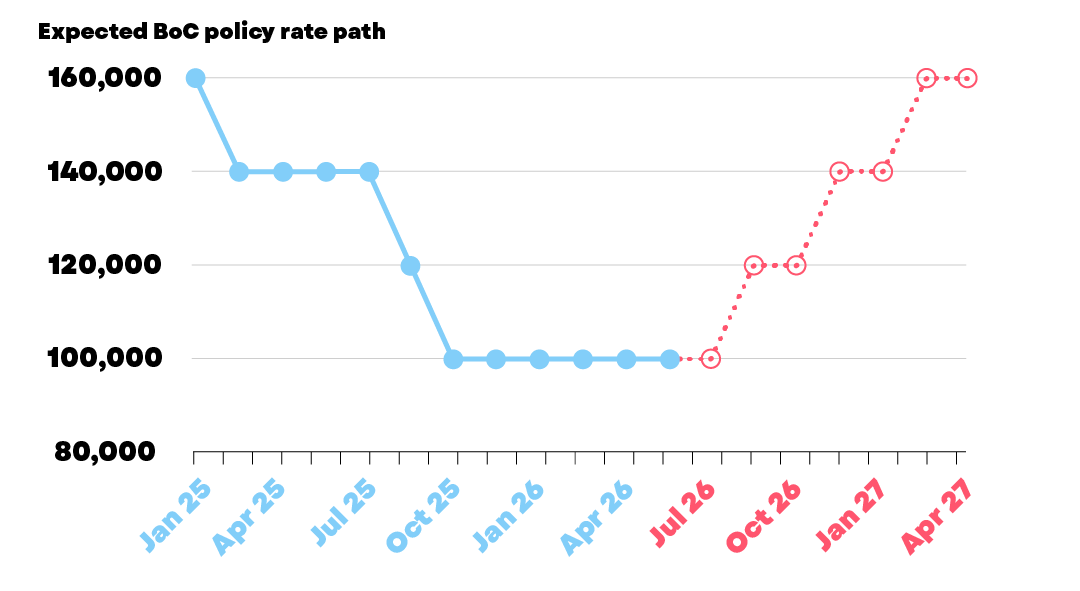
If you've been waiting for interest rates to fall further before making your move in real estate, here's the update you need to hear: the Bank of Canada's rate cutting cycle is over. Rates reached their cycle low in early 2026 and have been holding flat ever since. But market projections are now pointing in one direction. Up. Rising oil prices are feeding back into inflation expectations, and the window of maximum affordability that opened during the cutting cycle is quietly starting to close.
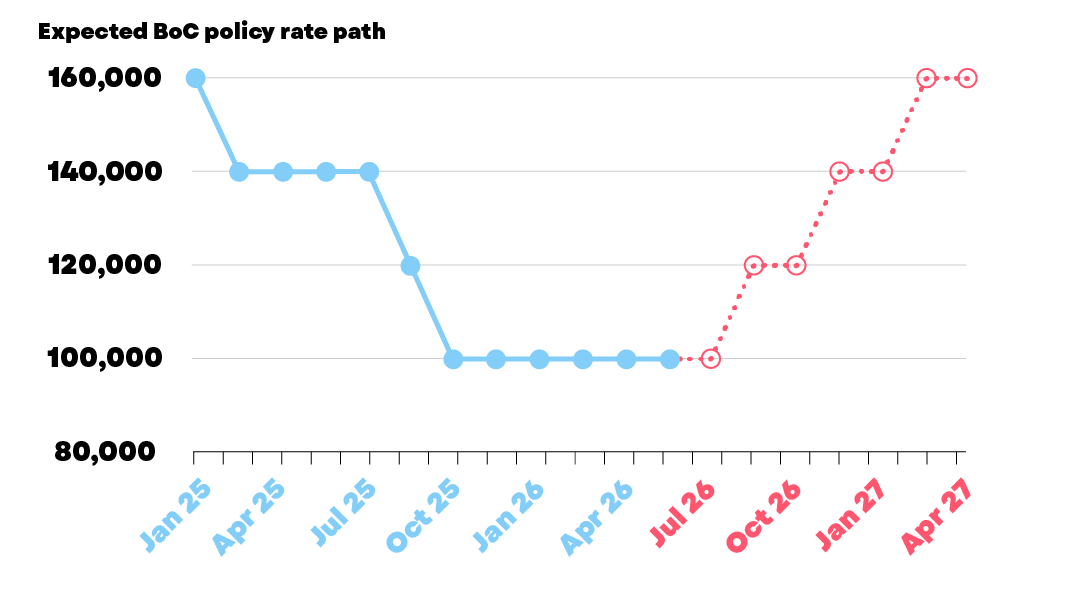
What the Rate Chart Is Actually Telling You
The data tells a clear two-part story. Here's what actually happened and what the market is now projecting.
What happened (January 2025 to April 2026, actual Bank of Canada data):
- Rates started near the peak of the Bank of Canada's hiking cycle in January 2025
- Three distinct rate cuts brought the overnight rate down in steps through 2025
- By October 2025, rates dropped sharply to their cycle low
- From January 2026 through April 2026, rates held flat at the bottom of the cycle
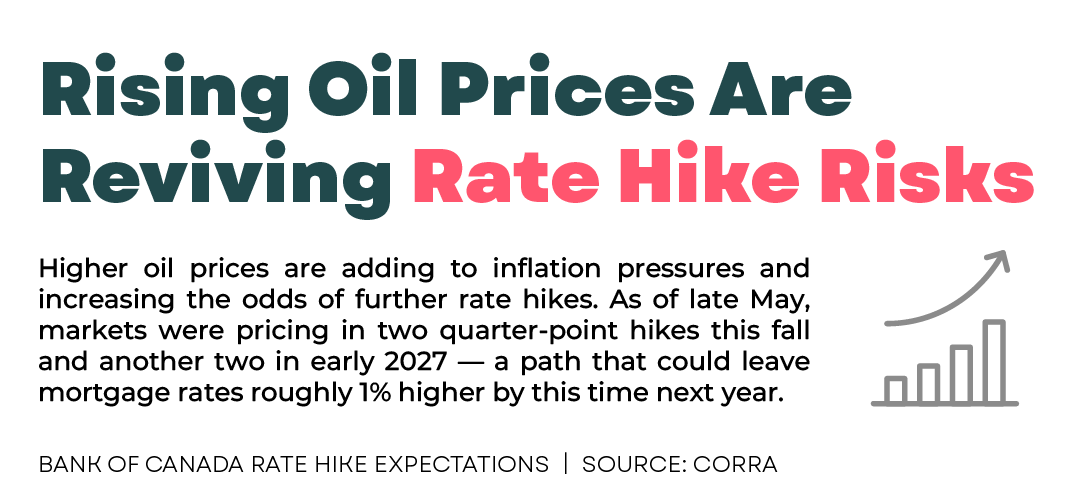
What the market is projecting (July 2026 to April 2027, forward projections):
- Three separate upward rate paths diverge from the current low starting around July 2026
- All three projected scenarios show rates rising. The only question is by how much.
- By April 2027, the most aggressive projection shows rates nearly back to mid-cycle levels
- Even the most conservative projection shows a meaningful increase from current lows
The bottom line is straightforward. The cutting cycle delivered rate relief. That relief is now at risk of being partially reversed, and buyers and sellers who act during the current flat window will be the ones who look back on their timing favourably.
Why Oil Prices Are the Wildcard
Unless you're in the Calgary real estate market, most Canadians don't immediately connect oil prices to their mortgage costs. But the link is direct and well-established. Here's how the transmission mechanism works:
- Oil prices rise, pushing transportation, manufacturing, and consumer goods costs higher
- Consumer goods inflation climbs above the Bank of Canada's 2% target
- The Bank of Canada considers raising its overnight rate to cool consumer spending
- The overnight rate rises, variable mortgage rates increase immediately, and fixed rates follow through bond market pressure
- Mortgage carrying costs increase, buyer purchasing power shrinks, and housing demand softens
This is precisely the chain of events that market-implied forward rate projections are now pricing in. Rising global oil prices in 2026 are reigniting inflation risk, and the Bank of Canada has made clear that future rate decisions will be data-dependent. If oil-driven inflation continues to build, the path of least resistance for the overnight rate is upward. How do rising oil prices affect Canadian mortgages? That chain above is your answer, and its playing out right now.
What the Rate Cycle Means for the Housing Market
Rate cycles and Canadian housing markets have a well-documented historical relationship. And right now, that relationship matters more than it has at any point in the last two years.
When rates fall, buyer purchasing power increases, mortgage qualification becomes more accessible, and housing demand typically strengthens, supporting price stability and appreciation. When rates bottom and hold flat, a window of maximum affordability opens. Buyers who act during this window capture the full benefit of the cutting cycle before the next tightening phase begins. When rates start rising again, buyer purchasing power shrinks, mortgage qualification tightens, and demand typically softens, creating headwinds for prices in rate-sensitive markets.
We are currently in the flat window, the most favourable rate environment of the current cycle. Market-implied projections suggest that window is narrowing. Buyers and sellers who understand that will make more informed decisions in the months ahead than those waiting for conditions to improve further. This is what a Bank of Canada rate decision impact on Canadian housing actually looks like in practice, not in theory.
What This Means If You're a Buyer
- The rate bottom is in. Waiting for further cuts is no longer a strategy supported by market projections. The Bank of Canada's cutting cycle has run its course, and forward rate markets are pricing in upward movement, not additional relief.
- Every projected rate hike directly reduces your purchasing power.For a $500,000 variable rate mortgage, each 0.25% overnight rate increase adds approximately $65 to $75 to your monthly payment and reduces your maximum qualification amount accordingly. Multiple hikes compound that effect quickly.
- Getting mortgage pre-approval now locks in your qualification at current rates, protecting your buying power regardless of what the Bank of Canada does next. In a rising rate environment, that protection is not a small thing.
- Buyers who act during flat-rate windows have historically entered ahead of the next demand surge, which typically follows rate normalization and increased buyer re-entry. Should you buy now before rates go up in Canada? The data makes a compelling structural case for it.
Get Pre-Approved Before Rates Move Again
Every Bank of Canada rate hike directly increases the borrowing cost you'll need to qualify for a mortgage, reducing your purchasing power before you've made a single offer. Getting pre-approved today locks in your qualification at current rates and puts you ahead of buyers who are still waiting to see what happens next.
What This Means If You're a Seller
- Rising rate risk means a shrinking qualified buyer pool. As the overnight rate climbs, fewer buyers can qualify at the price points that matter for your sale, and those who can qualify will offer less.
- Selling before the next hike cycle takes hold means transacting when buyer purchasing power is at its current cycle peak, not after it's been eroded by successive rate increases and tightening mortgage qualification.
- Markets that are already soft, Vancouver, Toronto, and Southern Ontario, face compounded headwinds if Bank of Canada rate hikes layer on top of existing affordability pressure. The timing question isn't academic for sellers in those markets.
- A current home valuation tells you exactly what your property is worth right now, before rate hikes change the demand equation and compress what buyers can offer.
Find Out What Your Home Is Worth Before the Market Shifts
Rising rate risk doesn't just affect buyers. It affects seller timelines too. As rates climb, buyer purchasing power shrinks and qualified demand softens. Sellers who act ahead of the next rate hike cycle will transact in a more favourable demand environment than those who wait. Get a free home valuation today.
The Bottom Line
Rates hit bottom in early 2026. The Bank of Canada data is clear, and so are the market-implied projections pointing upward from here. The window of maximum affordability that the cutting cycle created is still open, but rising oil prices and the inflation risk they carry are giving the market every reason to expect that window to close. Canadians who act during flat-rate windows have consistently made better real estate decisions than those who wait for a certainty that arrives only after the opportunity has passed.
Talk to an Agent Before the Rate Window Closes
The Bank of Canada's rate cutting cycle is over, and market-implied projections show rates climbing back up through 2027. The window to buy or sell at current rate conditions is narrowing faster than most Canadians realize. Connect with a trusted local agent today and make your move before the next hike cycle takes hold.
Frequently Asked Questions
Will the Bank of Canada raise interest rates again in 2026 or 2027?
Market-implied forward rate projections as of mid-2026 suggest the Bank of Canada's cutting cycle has ended and rate hike risk is re-emerging, primarily driven by rising oil prices feeding back into inflation expectations. While the Bank held rates at their cycle low through the first half of 2026, forward projections show a spread of possible upward paths through April 2027. The Bank of Canada has consistently stated that future rate decisions will be data-dependent, meaning inflation readings, payroll employment data, and energy price trends will all influence whether and when hikes materialize.
How do rising oil prices affect Canadian mortgage rates and housing?
Rising oil prices affect Canadian mortgage rates through their direct impact on consumer inflation. When oil prices climb, transportation, manufacturing, and consumer goods costs rise, pushing overall inflation higher. If inflation moves above the Bank of Canada's 2% target, the Bank may respond by raising its overnight rate to cool spending. Higher overnight rates translate directly into higher variable mortgage rates and put upward pressure on fixed rates through bond market dynamics. For Canadian real estate, rate hikes reduce buyer purchasing power, tighten mortgage qualification, and typically soften housing demand, particularly in already-stretched affordability markets like Vancouver and Toronto.
What does a Bank of Canada rate hike mean for Canadian home buyers?
A Bank of Canada rate hike directly reduces home buyer purchasing power by increasing the cost of mortgage borrowing. For every 0.25% increase in the overnight rate, a buyer with a $500,000 variable rate mortgage sees their monthly payment increase by approximately $65 to $75, and their maximum qualification amount decreases accordingly. Multiple hikes compound this effect significantly. According to CMHC affordability data, rate sensitivity is highest in markets where buyers are already stretching their qualification limits, including Toronto, Vancouver, and Hamilton. Buyers who get pre-approved before a rate hike cycle takes hold lock in their qualification at current rates, protecting their purchasing power regardless of what the
Data Attribution: Bank of Canada overnight rate path sourced from Bank of Canada rate decisions (January 2025 to April 2026, actual) and market-implied forward rate projections (July 2026 to April 2027). Supporting context drawn from the CMHC Housing Market Outlook, Financial Consumer Agency of Canada mortgage guidance, and TD Economics interest rate outlook.
Posted by Christopher Audette on
Leave A Comment