Stay connected with what is hapening in the world of real estate and housing markets throughout Canada.

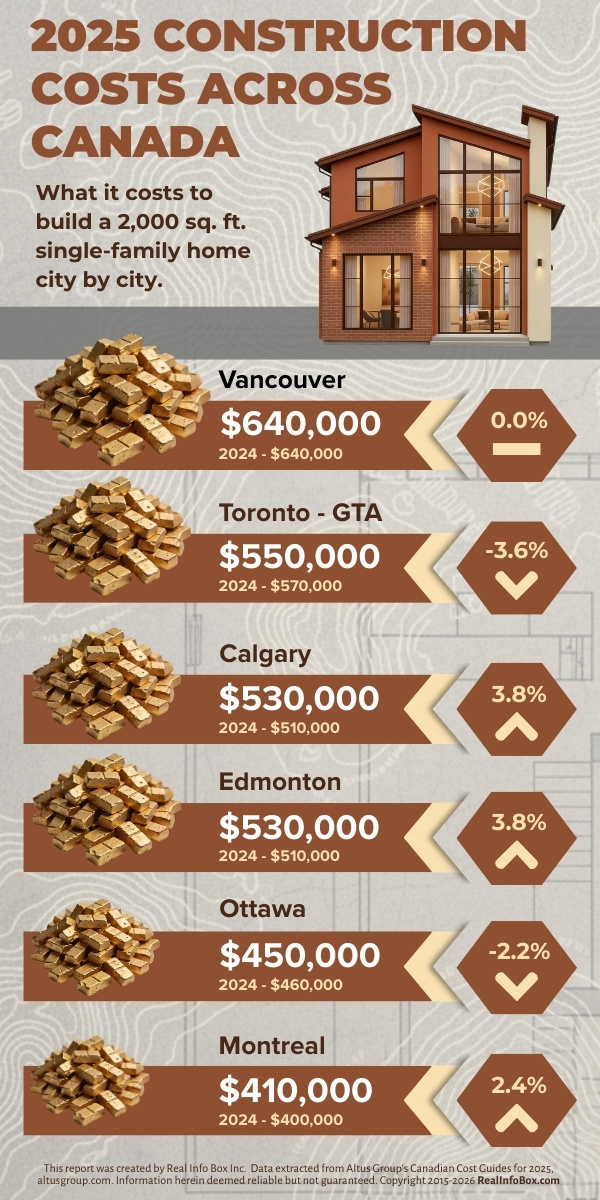
Here's a number that'll stop you mid-scroll: building the exact same 2,000 sq. ft. home costs $230,000 more in Vancouver than it does in Montreal. Same size. Same building type. Completely different price tag.

That gap tells you more about how Canadian construction pricing actually works than any national average ever could.

All figures below come straight from Altus Group's Canadian Cost Guide for 2025. Here's what's changed, and what hasn't.

The 2025 New Home Construction Costs, City by City

The benchmark: a 2,000 sq. ft. wood-framed single-family home with an unfinished basement, using the upper-end estimate per city.
What's Actually Driving Costs in Each City

Vancouver: Still the Most Expensive, But Finally Flat

At $640,000,…

2191 Views, 0 Comments
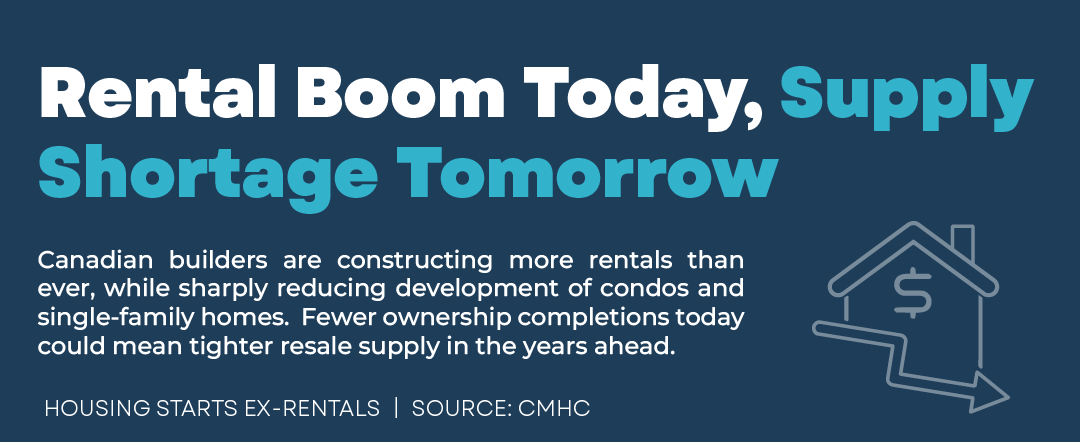
That headline isn't an exaggeration. It's data straight from CMHC. Canadian ownership housing starts have fallen to approximately 100,000 units on a 12-month rolling basis in 2026, matching the lowest level ever recorded in the dataset. The last time the Canadian residential construction sector was here was 2010, right after the global financial crisis. And what happened in the years that followed should be on every buyer's and seller's radar right now.

What "Housing Starts" Actually Means, And Why It Matters

A housing start is counted when construction begins on a new residential unit. The figure CMHC tracks as "ex-rentals" measures specifically the condos and single-family homes that will eventually be available for Canadians to buy, not…

1812 Views, 0 Comments

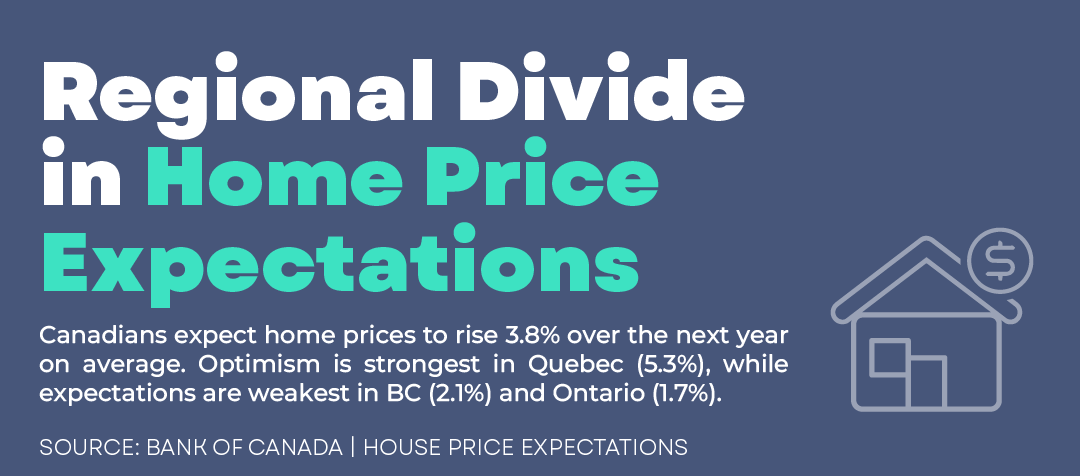
The Bank of Canada's Q1 2026 house price expectations survey answers this question with more clarity than you usually get from national housing data. Quebec at 5.3%. Atlantic Canada near 5%. Manitoba and Saskatchewan close behind. Alberta at 4.1%. All of them running above the national average of 3.8%.

Then there's the other end of the table. Ontario at 1.7%. BC at 2.1%. The two weakest provincial markets in the country, sitting 3.6 percentage points below Quebec's expectation. That's not noise in the data. That's a structural divide, and it creates entirely different strategic realities for buyers and sellers depending on which side of it they're on.

Why Are Ontario and BC Home Prices So Weak in 2026?

If you've looked at the housing market…

1770 Views, 0 Comments

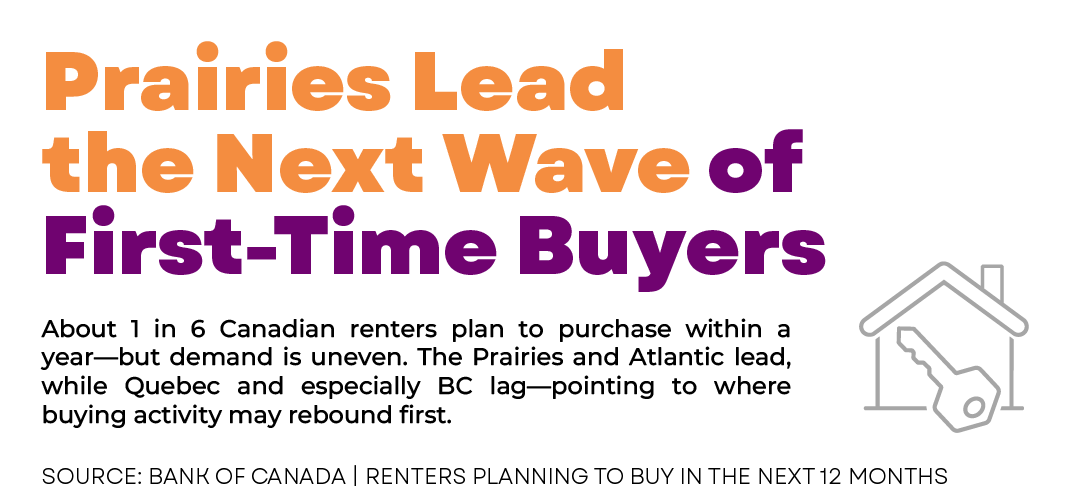
1 in 6 Canadian Renters Plan to Buy in 2026

About 1 in 6 Canadian renters plan to purchase a home within the next 12 months. That's a real number, not a projection, not a forecast. It's pent-up demand quietly building beneath a market that, on the surface, looks calm.

But here's what the national headline misses.

According to the Bank of Canada's Q1 2026 Survey on Renter Buying Intentions, that demand is wildly uneven across Canada's provincial housing markets. And the gap between the most and least motivated provinces is wider than most buyers and sellers expect.

Manitoba sits at approximately 21% of renters planning to buy. BC sits at just 6.5%. Same country. Same survey. Completely different housing market realities.

Where First-Time…

234 Views, 0 Comments

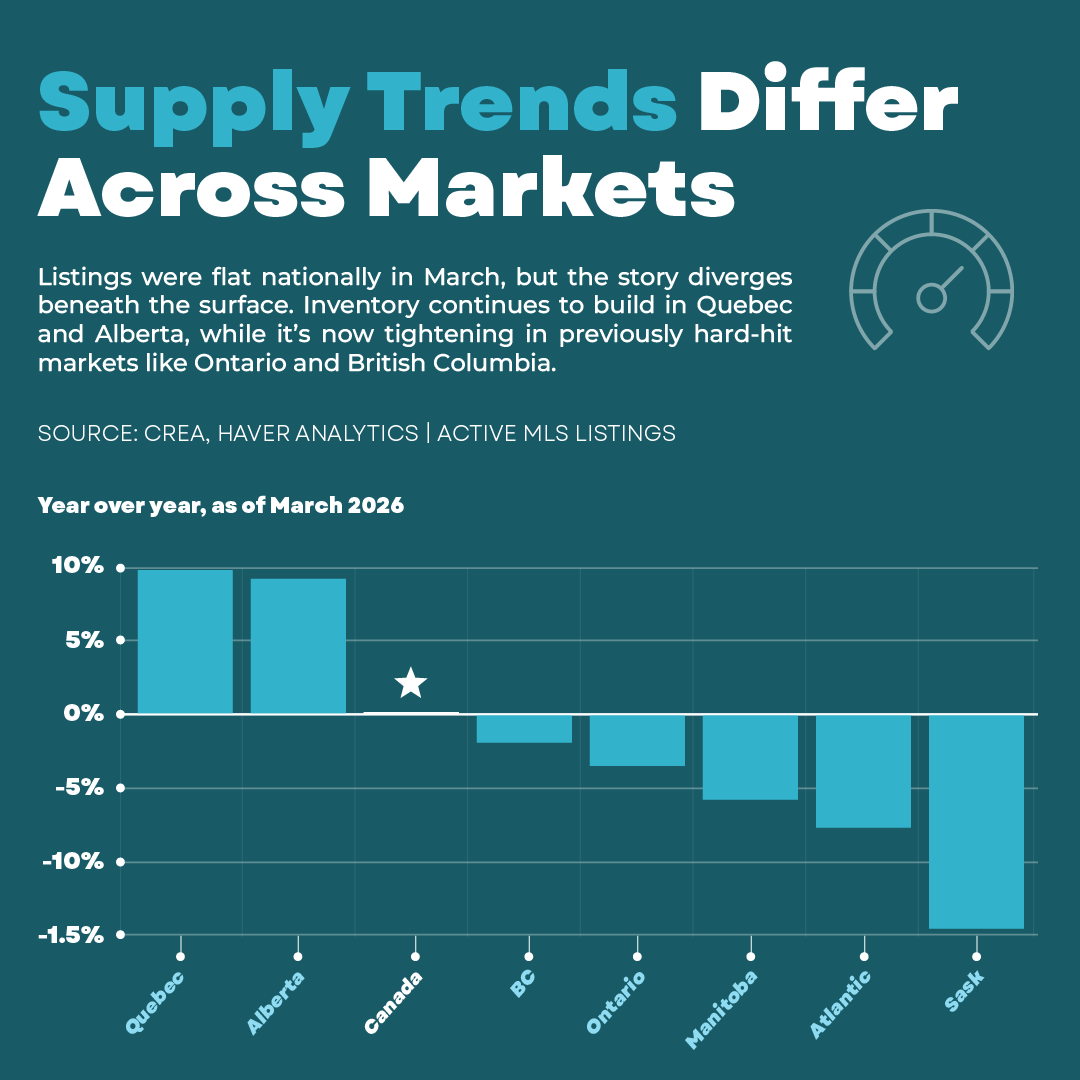
Saskatchewan home listings dropped 13% year-over-year in March 2026. Meanwhile, Quebec and Alberta saw inventory climb nearly 9%. Same country, same month, completely opposite markets. If you're making a buying or selling decision based on national headlines, you're likely reading the wrong data.

According to CREA and Edge Analytics, active MLS listings across Canada were essentially flat year-over-year as of March 2026. That national figure is technically accurate, and almost entirely misleading. Beneath it, Canadian real estate inventory is moving in sharply opposite directions depending on where you live.

Where Inventory Is Building: Quebec and Alberta

Both Quebec and Alberta posted year-over-year inventory gains of approximately 9%, the…

881 Views, 0 Comments

The Canadian housing market is currently a study in contradiction. If you look at the headlines, you’ll see that sales are quiet. But if you look at the data, you’ll see a pressure cooker.

A recent analysis of home sales per 1,000 population reveals a startling trend: Canadian home sales per capita are at historically low levels in 2026. Following the "pulled forward" demand of the post-pandemic surge, the market has dipped significantly below the long-term average. This isn't just a lull; it is the sound of a spring being coiled.

The question on every Canadian's mind is no longer just "what is happening?" but "is now a good time to buy a house in Canada?" ---

The Gap Between Sales and Reality

According to the latest data from CREA and…

163 Views, 0 Comments

Canada Home Price Trends 2023–2025: Where the Market Is Growing — and Where It’s Cooling

Canada’s housing market between 2023 and 2025 reveals a powerful shift in buyer behavior and price performance. While headlines often focus on Toronto and Vancouver, the strongest appreciation over the past two years has occurred elsewhere.

National Price Trends at a Glance

Between 2023 and 2025, several Canadian cities recorded double-digit home price growth:

  • Edmonton: +14.79%
  • Saskatoon: +13.61%
  • Winnipeg: +12.56%
  • Montreal: +12.34%

Meanwhile, some of Canada’s most expensive regions experienced declines:

  • Greater Toronto: -7.65%
  • Greater Vancouver: -0.84%

Cities like Calgary (+7.29%), Ottawa (+3.49%), and Victoria (+2.01%)

410 Views, 0 Comments

Toronto Real Estate: Rising Prices, Tight Competition, and Market Hesitations

Sales Are Expected to Climb in 2025

The Toronto Regional Real Estate Board predicts home sales will jump 12.4% in 2025, hitting 76,000 transactions. The board ties this increase to lower borrowing costs, which should improve affordability.
Average prices are also projected to rise, with the board estimating a 2.6% gain to $1,147,000. Single-family homes will see stronger appreciation, while other segments maylag behind.

Buyer Confidence and Market Uncertainty

A survey from Ipsos found that 28% of respondents plan to buy a home in 2025, while 37% expect to sell. These figures align with last year’s responses, suggesting market attitudes haven’t shifted much despite…

1922 Views, 0 Comments